I Complained About A Board Director's Unethical Behaviour. Now He’s The Chair, And He’s Coming For Me.
Apr 28, 2026
Q:
“As the ED of an organization, I have had some difficult interactions with a specific board director who has asked me, in the past, to do unethical things. I have gently explained why we can't do the things he's asked - non compliance with CRA, internal policy, financial standards etc - and he did not react well. He is someone who doesn't like to be told no, and certainly not from a woman. He's hung up the phone on me, walked away from me mid-conversation, given me the silent treatment, and has aggressively tried to influence my performance reviews in what seemed like an attempt at reprisal.
I have shared my concerns about this behaviour with two different Board Chairs over the years, neither of which was willing to address it in a meaningful way; I have been told to ‘work it out’ and ‘get over it’. Now this director is my incoming Board Chair and I am worried. He will wield a lot of power as Chair. I get the sense that he is looking to be that final arbiter of my performance review and he will direct things to punish me. To be clear, he hasn't asked me to do anything unethical in the past year and a half. He just doesn't communicate with me much at all except to give me instruction on committee work. Is there anything I can do in this situation (other than start looking for another job)?”
A:
This is why I always say: EDs don’t quit jobs, they quit boards. And I am so very tired of seeing great leaders pushed out of organizations - or leave the sector altogether - because of ego-tripping volunteers and the boards that refuse to rein them in.
A job search is a totally legitimate option here. But before you go that route, here are a few strategies to try to navigate a challenging board chair relationship without quitting your job.
Make an Action Plan
Before you start working with the incoming chair, take some time to think through a few scenarios, and decide what kind of response you want to take for each. Maybe the scenarios are:
- Irritating - when the chair behaves in an obnoxious manner that gets under your skin (like hanging up the phone on you . . . honestly this is so childish!)
- Problematic - when the chair’s behaviour gets in the way of doing your job (like asking you to skirt CRA requirements)
- Egregious - when the chair’s behaviour reaches a level that would be considered misconduct (this could be a legal threshold, but it could also be something that you define personally)
For each scenario, think about what kind of response you may want to aim for in the moment, what kind of follow-up you would like to see afterward, and how you would want to deal with repetitive or escalating incidents. For example, you may decide that for your own sake, you will simply ignore irritating behaviour, or you may have some low-stakes responses at the ready like, ‘please keep things professional’. Problematic behaviours may warrant a brief email response, with a strategy for dealing with repetitive issues via communication with the governance committee. Egregious behaviour might trigger an email to the full board outlining the issue, organizational risk and requested next steps; or perhaps it’s the signal that it’s time to seek legal counsel.
Having a game plan can give yourself a sense of clarity and agency in a challenging and emotionally fraught dynamic, armed with a sense of what your full range of options looks like. This may make your day-to-day experience more tolerable, allowing you to ‘choose your battles’ while protecting your own wellbeing. It can also clarify for you when you want to take bigger steps, like searching for a new role, if you want to. From this lens, you can also begin documenting all of your interactions with the incoming chair, if you haven’t already; down the road, if you need to bring your concerns to the full board or take legal action, it will be important to have this record.
Shift Communication Norms with Your Board
Although it’s a common approach across the sector, delegating board/ED communication to the chair is a risky practice. I am often advising organizations to adopt distributed communication pathways between the board and executive, not only because it is more effective, efficient and sustainable, but so that organizations can avoid a situation that enables bad actors to take advantage of positions of power. From the ED side of things, it’s not easy to challenge this convention, but I strongly recommend it here. This involves shifting away from one-on-one engagements with the chair, and promoting direct communication with the full board as often as possible.
Do not meet 1:1 with this chair
Do everything in your power to always have another person present in your meetings with the incoming chair. If your organization has an informal practice of regular one-on-one ED/Chair meetings, shift the dynamic to include another board officer like your past chair or vice chair, governance chair, etc. If that’s a no-go, bring a senior staff member into the meetings with you. If all else fails, switch to phone or zoom meetings, transparently record your meetings ‘for notetaking purposes’, or always send a follow-up summary of the conversation by email.
Chances are, the incoming chair will push back hard against this, so if possible, make this switch before he steps into the role, and announce it to the full board as a governance best practice that you are adopting. You can do this under the banner of succession or transparency, and if all else fails, try appealing to the incoming chair’s ego - asking to bring in another board director or senior staff as a ‘learning experience’ for them.
Communicate with the full board
As much as possible, keep your communications open to the full board, rather than letting the incoming chair act as a gatekeeper. Make a habit of copying the full board (or committee or executive, depending on the context) on email communications; so for example, if the incoming chair sends you an email, your reply should always involve a ‘CC’. Adopting this practice for all board directors, not only the chair, sets it up as a standard that is universally applied.
Push side conversations back to formal meetings as much as possible, and use your ED report as a tool to share information directly with the full board (and this also lets you choose what to speak to during board meetings without getting the chair’s approval of an agenda item). If this approach is questioned, you can feel confident reminding folks that your relationship is with the full board, and that your goal is to support transparency and efficiency in governance.
Address the Performance Evaluation Risks
Your main concern is about reprisal via your performance evaluation. This is an understandable concern, since performance evaluations can directly impact compensation, employment status and your relationship with the board. There are some structural changes that, if it’s possible to implement them, can shift the power dynamic around performance evaluation. Beyond that, you can prepare yourself with some options for managing an unfair evaluation.
Re-work your performance management process
One of the things you can do to mitigate the risk of reprisal during performance evaluation is to shift the board’s practice around how this is handled. I always recommend that executive performance management is handled by a small board committee of three directors, rather than by one individual. This is a practice you should try to have adopted sooner than later, and ideally, championed by your governance committee or an allied board director if possible.
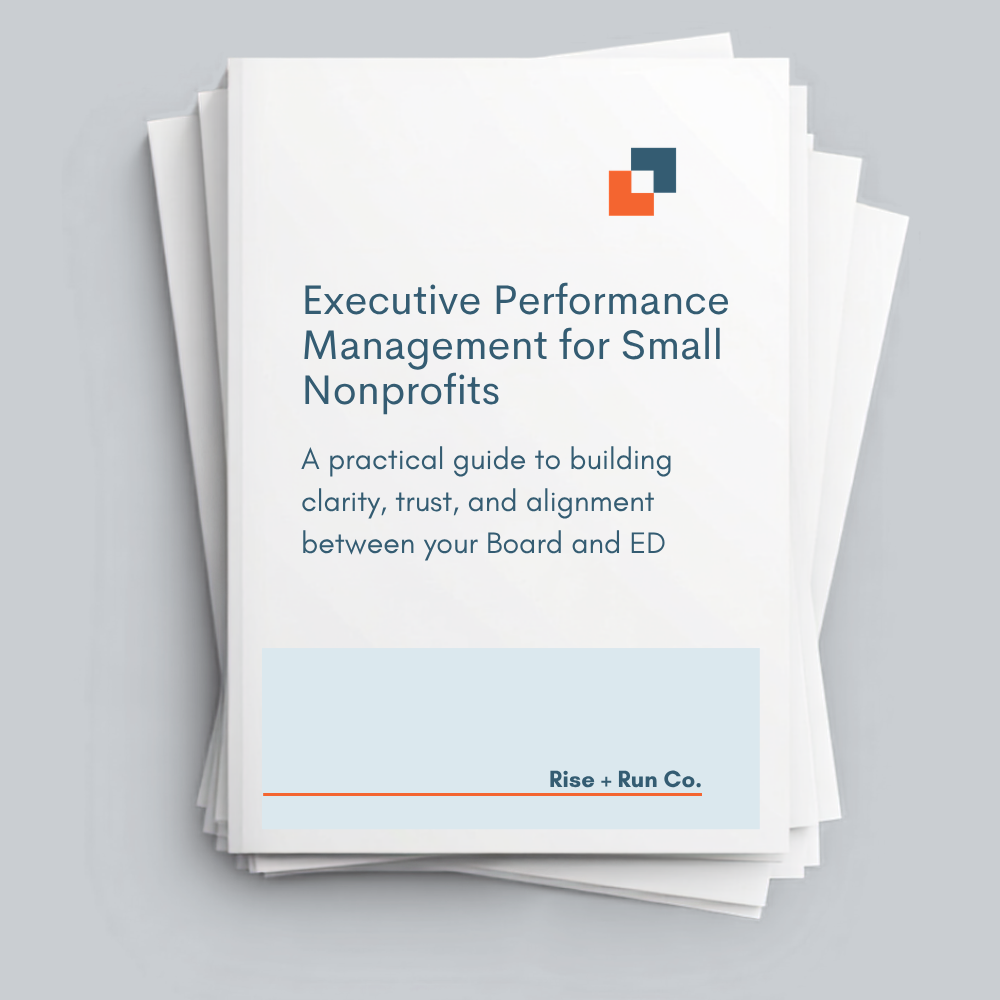
I offer a free online board training about executive performance management that you can share with your board, where I talk about the risks of making the board chair the single point of contact for performance reviews (it also talks about evidence-based performance management, which may be a worthwhile shift as well, but a bigger lift). If the board needs an additional push on this, it may be helpful to point out that distributing this responsibility will take some pressure off of the chair role, and can create engagement and leadership development opportunities for other board directors.
Addressing an unfair performance evaluation
If your fears are realized, and the incoming chair uses your next performance evaluation as an opportunity for reprisal, how would you handle that? It may be worth thinking about this as one of the scenarios described above - would you consider that irritating, problematic or egregious? Is it something you could let slide, knowing that it’s not a true reflection of your leadership? Would it have a material impact on your career or life? Do you think it might lead to significant stress or emotional harm? Would it affect your trust, confidence, or motivation at work? I think it’s important to recognize that unfair evaluation always sucks, but in the nonprofit context, when you’ve dedicated years of your life to an organization, likely underpaid and under-appreciated along the way, it can really hit hard.
If you end up in this situation, and you don’t want to let it slide, you might consider writing a letter to the board in response. The contents of that letter would vary depending on the nature of the performance review, but I think it is very reasonable to, at the very least, share your perspective and perhaps, request a secondary review (maybe from a third party). That gives the board one more chance to do the right thing - it is much harder to dismiss concerns in writing - but be prepared for all possible responses, and know that these things can often get worse before they get better.
Build up A Support Network
As an ED, having a hostile relationship with your board chair is exhausting and demoralizing. It can erode your confidence and cause real harm to your wellbeing. I strongly recommend that you line up some support now, so that you have it, if and when you need it. A coach who understands nonprofit dynamics can be really valuable in helping you navigate the relationship and take care of yourself. If you don’t have access to funding for that sort of thing, try to find a peer or mentor who can play that role for you - there are unfortunately many nonprofit leaders out there who will find this story relatable and who would make supportive confidantes and advisors.
It’s also worthwhile to identify a few allies on your board. It sucks that your previous chairs did not take your concerns about the incoming chair seriously, and it’s disappointingly rare for board directors to stand up to ego-driven directors. But think about who on your board might be willing and able to champion some structural work around strengthening board/ED relationships. These people can be tapped into to take the lead on revising policies or introducing new practices (like advancing changes on how performance evaluation is managed).
One last thing to consider is if and when you may want to access legal counsel. If you are experiencing harassment, believe that your human rights have been violated, or that your board is out of compliance with their responsibilities as an employer, talk to a lawyer. This is often considered as a last resort, but I think most people who end up there wished they’d had legal advice sooner than later. There is a taboo about taking legal action against a nonprofit - especially one that you are deeply invested in - but I honestly don’t think we will ever get to a point where boards take this stuff seriously unless there is some real liability risk on the table.
Closing Thoughts
Hopefully, some of these approaches will be helpful in navigating a challenging dynamic with your incoming chair. But what I would really like to see in this situation is for your board to step up and ensure that all directors are behaving ethically. Boards are not barrels of apples - one bad director does not spoil the bunch. It’s the unwillingness of the ‘bystander’ directors to act that ruins a board, and often, drives great EDs away.
For all the board directors reading this story, please: take some time to reflect on your own governance culture, and think about how to build the infrastructure and skillsets needed to prevent and manage unethical board conduct. You may want to check out some past editions for ideas: ‘When Boards Look the Other Way: Power, Accountability, and The Risk of Toxic Board-ED Relations’, ‘Governance as Gatekeeping: What To Do When Your Chair Takes Over The Board’, ‘My ED Blew Up in a Meeting, and the Board Let It Slide. Shouldn’t Someone Have Stepped In?’.
Big Takeaways
- Choose your battles with a plan. Rather than reacting in the moment, EDs dealing with a hostile chair should build a tiered response framework so they can respond strategically while protecting their own wellbeing.
- Distribute power in the board-ED relationship. Relying solely on the chair as the communication gatekeeper is a governance risk. EDs should shift toward direct engagement with the full board so no single person can control the narrative.
- Structural change is your best protection. The most durable solutions are governance design changes that reduce the chair's ability to act unilaterally.
Don't miss our next story
Join our mailing list to receive the next issue of Nonprofit Board Stories to your inbox.